For decades, the path to the podium was dictated not just by talent, but by geography and budget. If you lived near a National Performance Center, you had access to high-speed optics, force plates, and a full team of biomechanists to analyze your gait. If you didn't? You were often left with a stopwatch and a coach's "feel."
SpeedTrackr was built to bridge this data divide.
By leveraging the sophisticated sensor array inside every modern smartphone, we’ve effectively democratized elite sports science. We are no longer in an era where data is a luxury; we are in an era where data is an equalizer.
The Biomechanics of Speed: What the AI Actually Sees
When you use our Sprinting Technique Analysis, you aren't just getting an AI "score." You are getting a breakdown of the specific physics that dictate human locomotion. Let's look at the three critical metrics our AI tracks and why they matter.
1. Ground Contact Time (GCT)
Ground Contact Time is the duration (in milliseconds) your foot is in contact with the track during a stride.
- Why it matters: At maximum velocity, elite sprinters like Usain Bolt spend less than 0.08s on the ground. The less time you spend on the ground, the more elastic energy you are returning into the track.
- The Democratization Factor: Traditionally, measuring GCT required expensive pressure-sensitive tracks or $10,000 optojump systems. SpeedTrackr calculates this via frame-by-frame pose estimation at 60–120fps.
2. Hip Height and Vertical Oscillation
Maintaining a high hip position is the hallmark of an efficient sprinter.
- Why it matters: If your hips "drop" during the mid-stance phase, you are losing energy and increasing your contact time. Low hips often lead to "sitting" in the sprint, which kills horizontal velocity.
- The Democratization Factor: Our AI identifies the hip joint as a keypoint, tracking its vertical fluctuation across every stride. This allows local coaches to spot "bottoming out" in real-time.
3. Torso Angle and Acceleration Mechanics
- Why it matters: In the first 10-20 meters, your body should move from a 45-degree piston-like drive into a vertical tall-sprint position. Rising too quickly—a common mistake among amateur athletes—kills your acceleration phase.
- The Democratization Factor: By superimposing a skeleton overlay, SpeedTrackr visually highlights the degree of lean, giving athletes instant visual feedback on their drive phase.
The "Coach-First" Philosophy: Data as a Cue
A common misconception is that AI is here to replace the coach. In reality, SpeedTrackr is designed as a force multiplier for coaching intuition.
"I used to tell my athletes they were 'casting' their stride too much. They didn't really get it. Now, I show them the SpeedTrackr overlay where their foot hits the ground way in front of their center of mass. The lightbulb moment happens instantly." — Coach J. Miller, Varsity Track & Field
By providing objective numbers, coaches can move away from subjective observations ("You look slow today") to data-driven cues ("Your GCT is up by 10ms, let's focus on pogo jumps to increase stiffness").
Socioeconomic Impact: A World Without Gatekeepers
Accessible technology doesn't just make athletes faster; it makes the sport fairer.
- Talent ID: Scouts can now look at verified data from an athlete in a remote village, not just those at elite academies.
- Injury Prevention: Tools like our Nordic Hamstring Analysis allow small clubs to monitor injury risk markers that were previously invisible without a medical-grade lab.
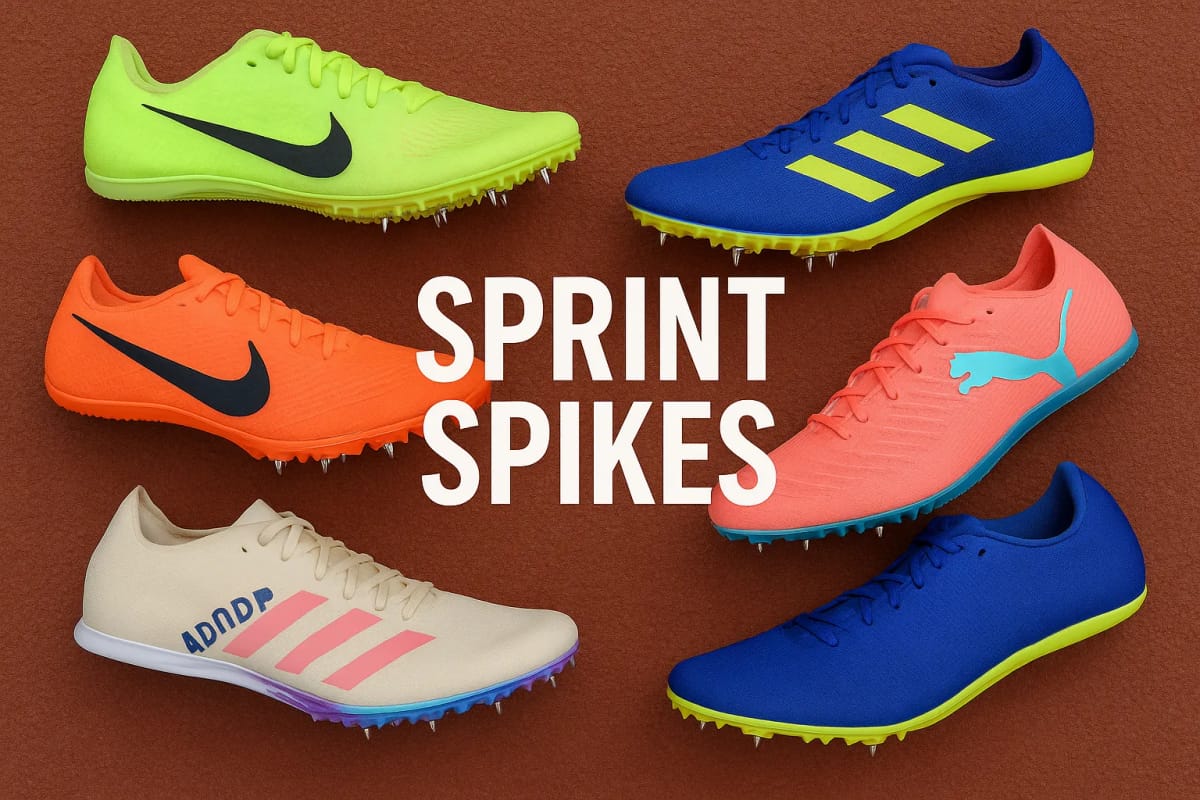
- Cost Reduction: A club can outfit 50 athletes with elite-level timing and technique analysis for the price of a single pair of high-end spikes.
The Future: From Analysis to Prescription
We are currently training our next generation of neural networks to move from descriptive to prescriptive analytics. Imagine an app that doesn't just say "Your hip is low," but says: "Based on 5 sessions of data, your hip height drops at 45m. We've added these specific glute-bridge variations to your Training Plan for next week."
The track is no longer a place of mystery. With SpeedTrackr, it’s a laboratory where every athlete is the lead scientist.
Ready to level up your training? Explore our Lab Tools and see what your data has to say.
Put it into practice.
Turn this insight into numbers — time your sprints, measure your jumps, and track your reaction time with SpeedTrackr for Android.
Free 4-week sprint plan.
Join the weekly sprint newsletter and get a research-backed 100m training blueprint — acceleration, max velocity, plyometrics, and speed endurance. Instant download.
Weekly, no spam. Unsubscribe anytime.