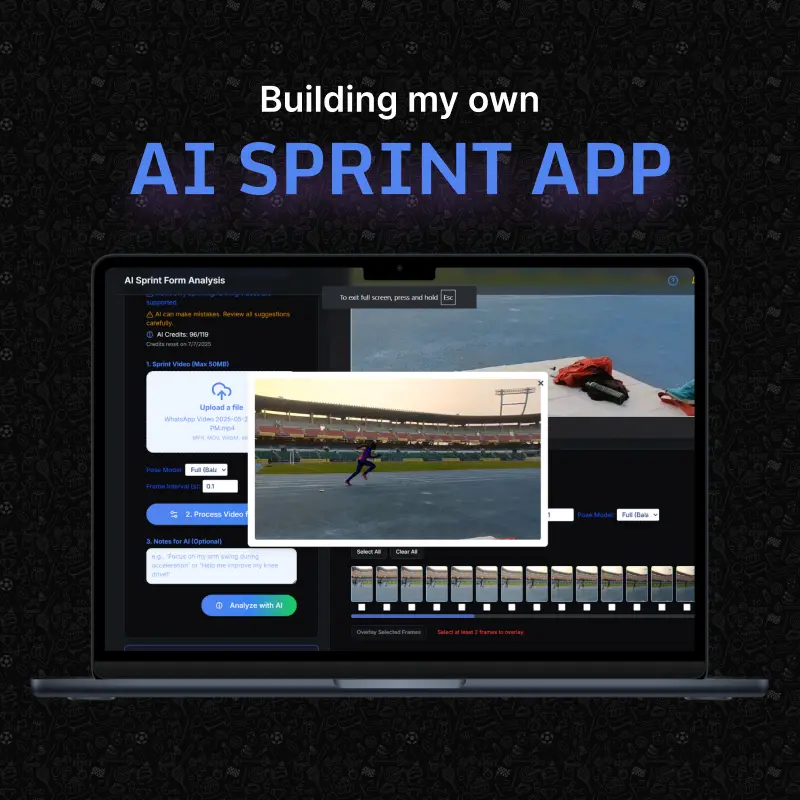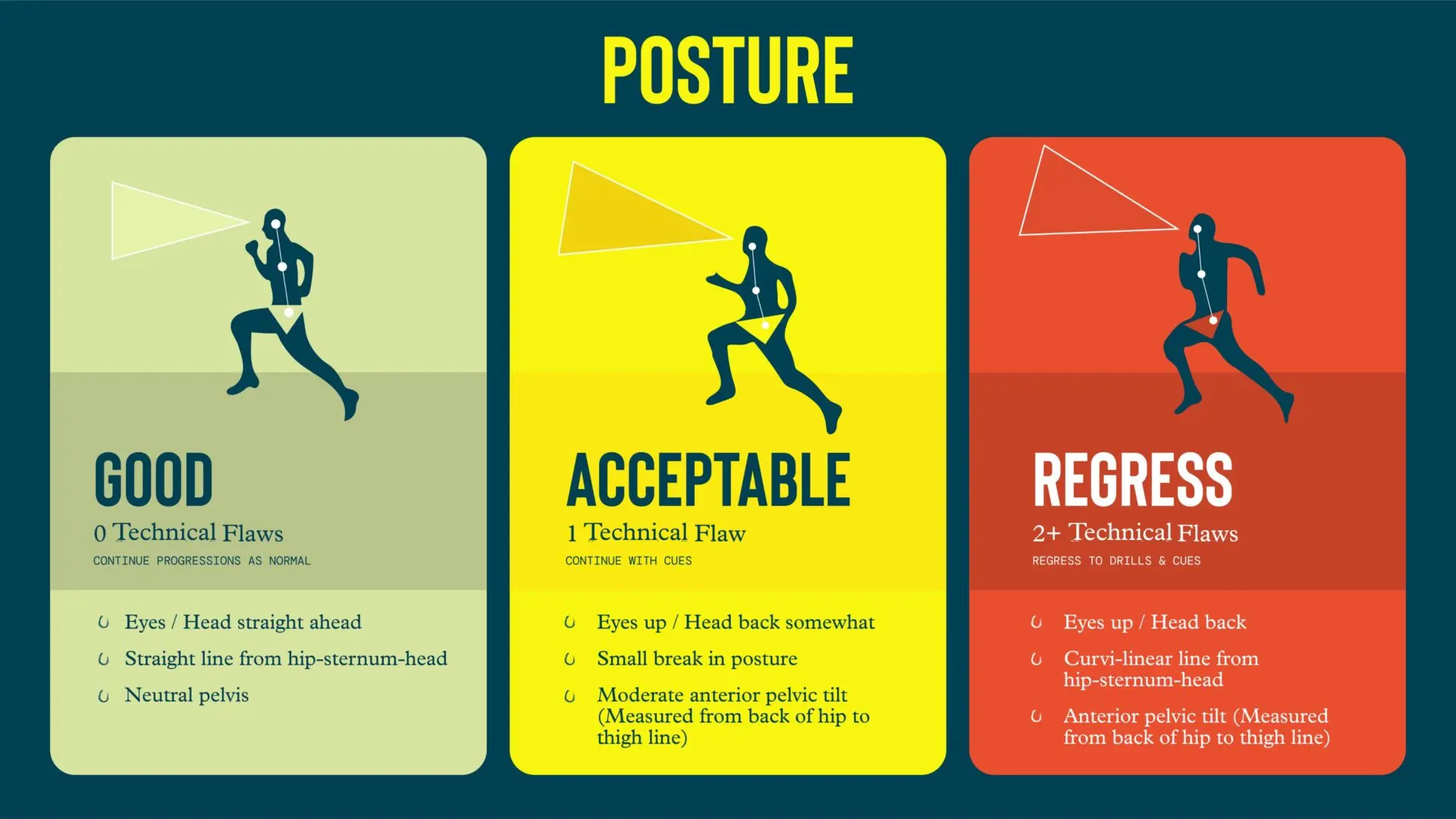
If your sprint times are stuck, posture is usually one of the first leaks. Small position errors at ground contact or during arm action can reduce force output and increase braking.
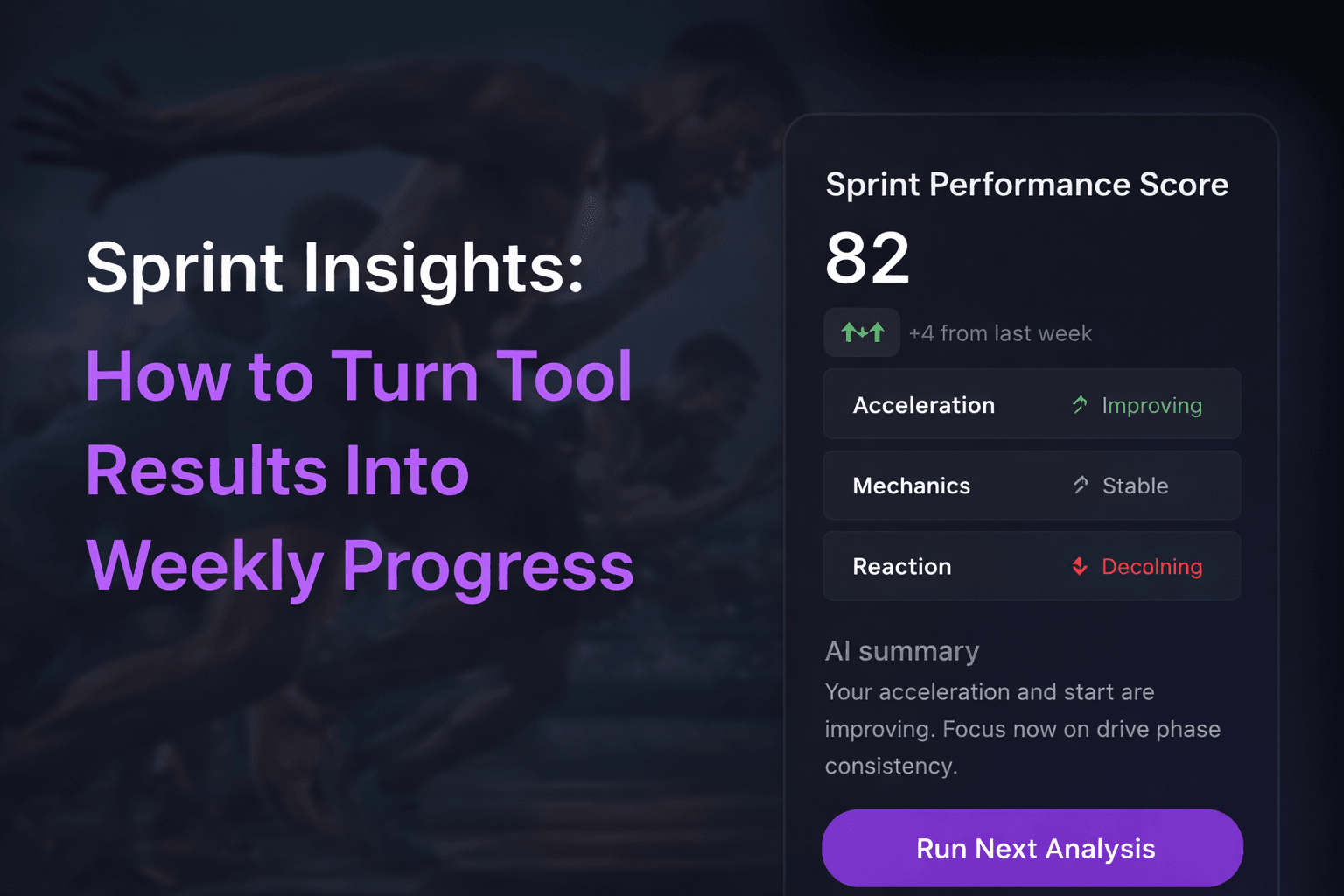
Film a few reps from the side, then time the same distance with dual-phone timing gates so you can see whether a posture fix actually moved the clock.
1. Overstriding in Front of the Hips
What it looks like
- Foot lands too far ahead of center of mass
- Longer steps but slower turnover
- Noticeable braking on contact
Why it hurts speed
You lose horizontal momentum each step. Instead of pushing the track backward, you absorb force.
Quick fix
- Cue: "Step down under hips"
- Use wicket runs or dribble drills for rhythm
- Film side-view reps to check where the foot lands
2. Collapsed Torso During Acceleration
What it looks like
- Chest folds too much or rounds
- Neck/head drops excessively
- Push phase loses projection quality
Why it hurts speed
You cannot transfer force efficiently from the ground through the trunk. This kills early acceleration.
Quick fix
- Cue: "Long spine, push through ground"
- Sled marches and wall drills for projection mechanics
- Keep eyes neutral, not buried into the track
3. Pelvis Drops and Hip Height Falls
What it looks like
- Hips sit low at max velocity
- Ground contact drifts longer
- Stride feels heavy instead of elastic
Why it hurts speed
Lower hip height usually means poorer stiffness and less efficient force return.
Quick fix
- Cue: "Run tall through hips"
- Add ankle stiffness and plyometric contacts
- Watch for hip level consistency in video
4. Arms Crossing Midline
What it looks like
- Hands travel across torso
- Shoulders rotate excessively
- Trunk stability is reduced
Why it hurts speed
Arm mechanics set sprint rhythm. Cross-body motion creates rotation that leaks force.
Quick fix
- Cue: "Cheek to pocket, straight path"
- Sprint arm drills in mirror or video feedback
- Keep hands relaxed and elbows around 90 degrees
5. Heel Recovery Too Wide or Too Low
What it looks like
- Rear leg swings wide behind body
- Recovery is delayed
- Step cycle becomes slow
Why it hurts speed
Recovery inefficiency increases cycle time and reduces front-side mechanics.
Quick fix
- Cue: "Compact recovery, quick front-side return"
- A-skips and dribbles for cleaner rhythm
- Reduce unnecessary backside swing
6. Posture Changes Too Much Between Phases
What it looks like
- Good acceleration posture, poor max-velocity posture
- Mechanics degrade under fatigue
- Inconsistent stride rhythm
Why it hurts speed
Inconsistent mechanics create inconsistent force output. You may run one good rep and lose the next.
Quick fix
- Segment training by phase (accel, transition, max velocity)
- Re-test with the same camera setup weekly
- Track phase-specific metrics, not only total time
Simple Weekly Fix Template
Use this structure for 2-3 sessions per week:
- 1 technical cue only per session
- 2 posture drills before sprint work
- 3 high-quality sprint reps with full recovery
- Review video after session
Final Takeaway
Most sprint posture mistakes are fixable once you can see them clearly and train one correction at a time. Keep the process objective: film, measure, correct, re-test.
Time a practice run here: dual-phone timing gates.
Put it into practice.
Turn this insight into numbers — time your sprints, measure your jumps, and track your reaction time with SpeedTrackr for Android.
Free 4-week sprint plan.
Join the weekly sprint newsletter and get a research-backed 100m training blueprint — acceleration, max velocity, plyometrics, and speed endurance. Instant download.
Weekly, no spam. Unsubscribe anytime.