Reaction Time Profiles
Understanding the split-second gap between the gun and the first movement. How elite athletes master the start.
What is Reaction Time?
Reaction time in sprinting is the interval between the acoustic signal (the starter's pistol) and the athlete's first muscular response on the blocks. It is a measurement of neuromuscular efficiency and psychological readiness. In professional competition, specifically under World Athletics rules, anything under 0.100 seconds (100ms) is considered a false start. This threshold is based on the physiological limit of how fast a human brain can process sound and trigger a physical movement.
Why It Matters for Sprinters
In a 60m or 100m race, the margin of victory is often measured in hundredths of a second. An elite reaction time (typically between 0.120s and 0.160s) doesn't just give you a head start; it ensures you clear the blocks with maximum horizontal force. A poor reaction time forces an athlete to "chase" the field, often leading to technical breakdowns as they try to overcompensate for the lost time.
Benchmark Guidance
- Elite0.120s - 0.140s
- High Performance0.140s - 0.170s
- Developing0.170s - 0.250s
Research & Training Guides
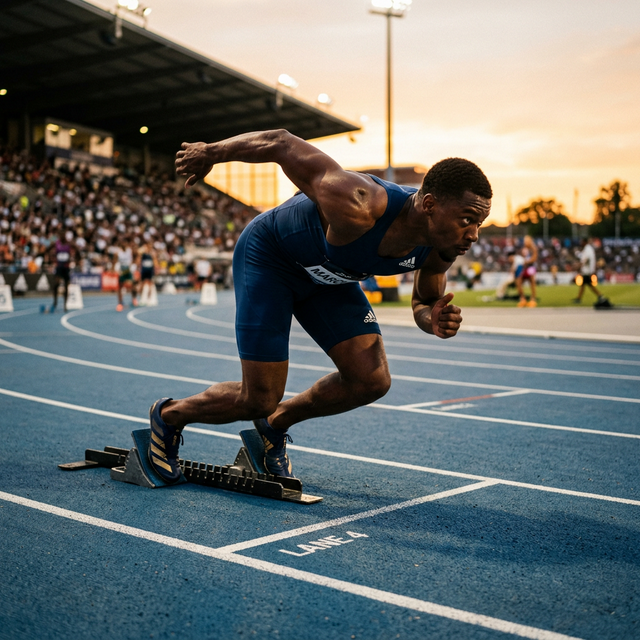
Block Start vs 3-Point Start: Which Should You Use?
Should you use blocks or a 3-point start for your sprint? We break down the differences, who should use what, and how to decide without overthinking.
Read More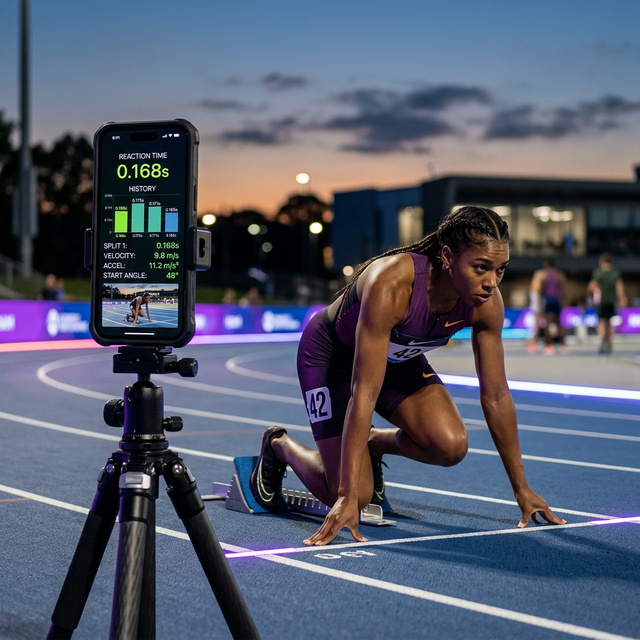
Reaction Time Training: What the Data Actually Shows
Reaction time is a critical performance trait, but it's often misunderstood. Discover what the data shows about training your reflexes and how to measure it accurately.
Read More