Phone-camera VBT without a linear transducer
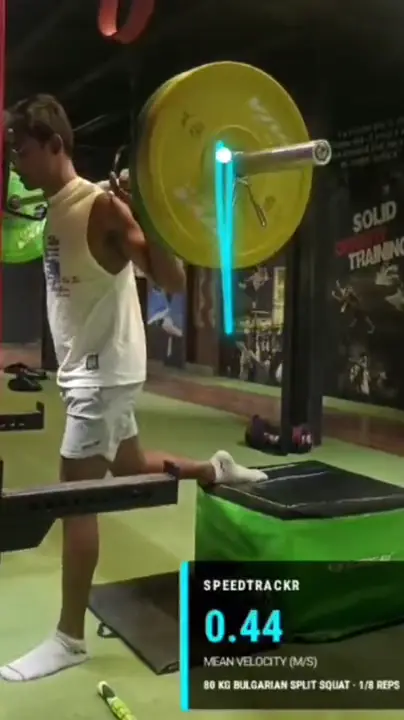
SpeedTrackr Barbell Velocity turns an Android phone into practice-grade video VBT: mean and peak concentric velocity, velocity loss, and a shareable bar-path overlay — no sensor on the bar. Free to start. Not a claim of encoder parity with Metric or Qwik.
Toolkit demo · bar-path overlay
Film the set. Cut when velocity loss says so.
Session VBT from phone video
On-device processing. One free set per day on the free tier. Same Android app as start/finish timing gates, jump/RSI, reaction, and sprint form.
Mean & peak velocity
Per-rep mean concentric velocity and peak velocity from phone video after you tap the plate — the session numbers coaches actually cut sets on.
Velocity loss
Velocity-loss autoregulation from the same clip so you can decide when to stop the set without guessing.
Bar-path overlay
A shareable bar-path overlay processed on-device. No linear transducer on the bar, and the lifting clip does not leave the phone for VBT.
Film, tap, decide
Film a clean side view
Android phone, plate in frame, decent light. Pick the athlete in Coach Mode so the set lands under the right name.
Tap the plate
Trim the clip in Barbell Velocity, tap the weight plate, and let on-device video VBT read the set.
Cut or keep the set
Read mean/peak velocity and velocity loss, show the overlay, save, and move on. Excel export stays in the Android app.
Android session lab — not encoder parity
Metric-class apps earn attention in VBT roundups. Use them if that is all you need. Use SpeedTrackr when bar speed should live next to practice start/finish timing, jump, reaction, and sprint form on the Android phones your squad already carries.
Keep a hardware transducer when your program already depends on one. Phone VBT here is practice-grade video measurement.
Strength athletes and coaches on Android
- 01Lifters who want velocity loss without buying a cable encoder
- 02Track / field coaches who already run SpeedTrackr timing and jump
- 03Small squads that need names on sets via Coach Mode — not a web OS
Frequently asked questions
Quotable answers about phone-camera VBT on Android — scope vs Metric/Qwik, free tier, and what this is not.
What is phone-camera VBT without a linear transducer?
How does SpeedTrackr compare to Metric or Qwik?
Is it as accurate as a cable encoder?
Is SpeedTrackr Android-only?
Is this a coach operating system?
Does VBT give sprint split times?
Does my lifting video leave the phone?
Is it free?
Get phone VBT on Android
Film the set. Cut when velocity loss says so. Free to start.
Get the Android app